A Behind-the-Scenes Look with Rebel Tree Care
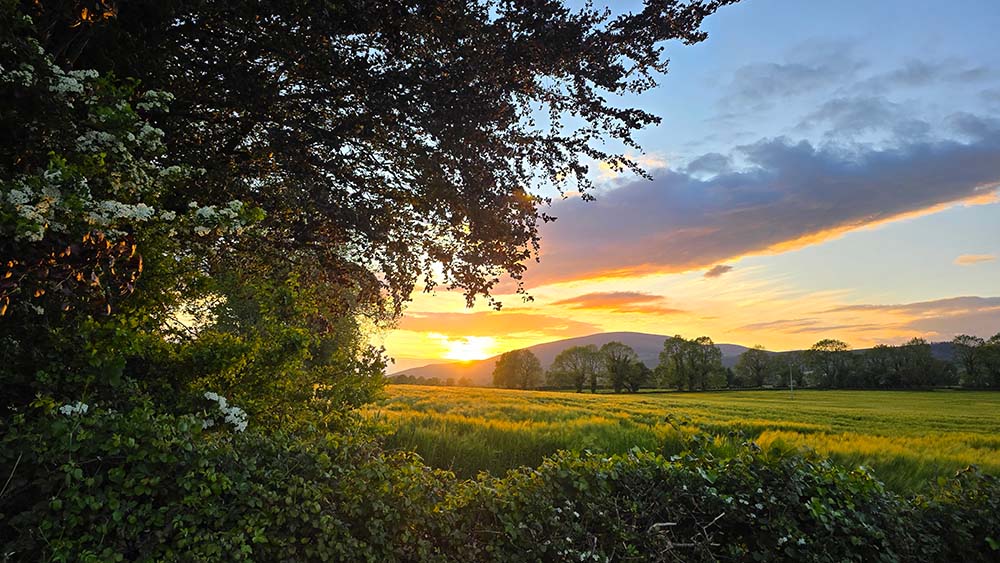
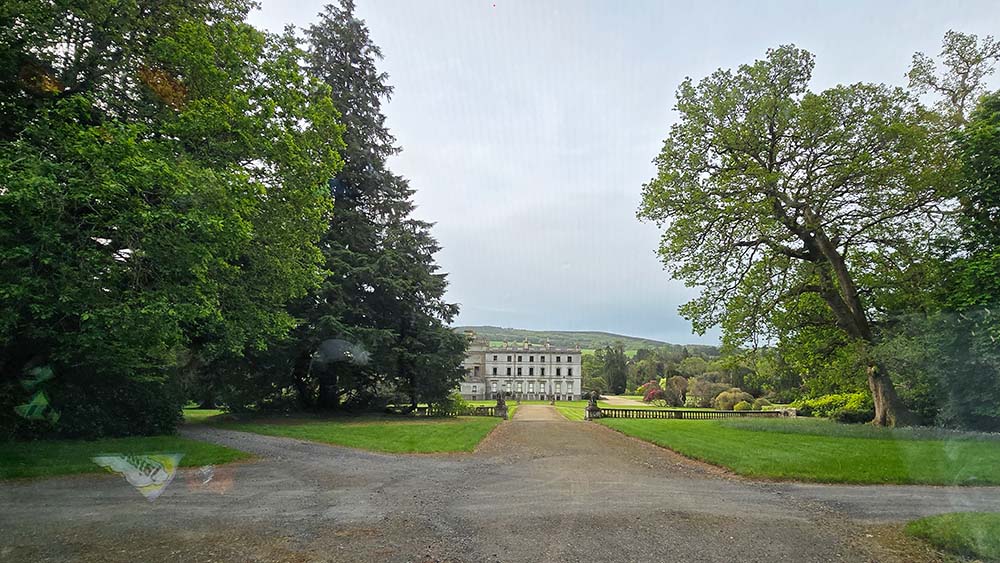
At Rebel Tree Care, we are lucky to work on some truly special sites across Ireland, and one that always stands out is Curraghmore Estate in County Waterford.
Recently, our team spent the best part of two weeks working on the estate in preparation for All Together Now, the music and arts festival held across the grounds. Curraghmore is a remarkable place to work, not only because of its scale and history, but because of the range of mature trees, woodland areas, riverside walks, old estate planting, and festival infrastructure all sharing the same landscape.
As a professional tree surgery company based in Cork and working across the wider Munster area, Rebel Tree Care is regularly involved in tree safety work, tree cutting, tree removal, tree reduction, deadwood removal, crown reduction, crown raising, site clearance, and specialist climbing work. On a site like Curraghmore, all of those skills come together.
Our work there is focused on tree safety and risk management. Before the festival opens to the public, we inspect and work on trees in areas where festival crew, contractors, artists, and visitors may pass through or gather. This can include removing deadwood, reducing hazardous limbs, felling unsafe trees, or carrying out selective pruning where branches are growing over walkways, structures, stages, campsites, or working areas.
The aim is always the same, to make the site safer while retaining as much of the character and ecological value of the trees as possible. Good tree surgery is not just about cutting trees. It is about understanding tree structure, tree health, site use, public access, and the safest way to manage each situation.
Curraghmore itself is known for its historic gardens and champion trees, including notable Sitka spruce specimens on the estate. It is a beautiful place to work, and during our stay we were even granted permission to fish for trout on the river, which was a rare privilege after long days in the trees.
Work in the Global Roots Area
One of the first areas we worked in was the Global Roots area of the festival site.
Here, Rebel Tree Care dealt with a large mature ash tree, Fraxinus excelsior, showing symptoms consistent with ash dieback, caused by Hymenoscyphus fraxineus. Ash dieback has become one of the most serious tree health issues affecting ash across Ireland and the UK, and it often creates a real safety concern where trees are located near public access routes, stages, roads, houses, gardens, or structures.
This particular ash had branches extending over festival-built structures and public walkway areas. One of our climbers accessed the tree and removed a significant portion of the upper crown, approximately 40% of the height, with a view to allowing the main stem to be felled at a later stage in longer lengths.
The reason for this approach was important. Rather than simply cutting everything into firewood or processing it immediately, the plan was to retain usable lengths of timber so they could potentially be milled on site and turned into planks. These planks can then be reused in the building of future stages, structures, and festival features.
That is one of the really positive things about the work at Curraghmore. Where suitable, timber from the estate can be given a second life, either as building material for the festival or as firewood for heating the main house. It creates a very satisfying cycle, where material from the site remains part of the site.
In the same area, we also felled another diseased ash tree affected by ash dieback. This was carried out safely and efficiently by the Rebel Tree Care team as part of the wider programme of tree safety works.
Reducing a Mature Lime Over Public Access
Also in the Global Roots area, we worked on a mature lime tree, likely Tilia cordata, commonly known as small-leaved lime. The tree had a large, open, sprawling canopy, with one substantial limb growing out over a public access area and leaning into a neighbouring fir.
This limb was a tree-sized section in its own right, so the work required careful access, positioning, and pruning. This is the kind of tree reduction work that requires experience, patience, and the right climbing systems. I used a Big Shot, which is essentially a large arborist slingshot used with a throwball and throwline, to place a line high into the canopy. Once the line was set in the correct union, I pulled two climbing ropes into place and accessed the tree using modern SRT/SRS climbing techniques.
SRT was traditionally known as Single Rope Technique, but the more current term is Static Rope System. These systems allow climbers to access tall or complex trees efficiently while maintaining controlled rope positioning throughout the climb.
Once in the canopy, I climbed out along the large lateral limb and reduced it away from the neighbouring fir, making the area safer while preserving the rest of the tree. For anyone searching for tree reduction, tree cutting in Cork, or specialist tree surgery for mature trees, this is a good example of how careful reduction work can manage risk without removing more of the tree than necessary.
A Severely Decayed Stump in Laurel
Another task in the same area involved an extremely decayed old stump growing within a dense cluster of laurel.
The timber was so rotten that it was almost paper-like in places. The base was approximately three to four feet across, but the structure was too compromised to climb safely. In this case, the safest approach was to fell it from the ground.
Before felling, one of the ground crew cut a clear path around the stump, creating approximately two metres of clearance and an escape route. Once the area was prepared, the stump was felled back into the laurel, where it could be left to decay naturally without posing a risk to the public or damaging nearby structures.
Sometimes the best arboricultural solution is not to over-handle material. If a decayed stem can be safely put into a non-access area and left to break down naturally, it can continue to provide habitat and return nutrients to the soil.
Oak Deadwooding in the Wellfield
Further down the site, in the area known as the Wellfield, we carried out deadwooding works on two mature oak trees.
Both trees were showing signs of oak decline or dieback. Oak decline can be a complex condition involving several interacting factors, including environmental stress, insect activity, pathogens, and in some cases organisms such as Phytophthora species. Oak decline is generally considered a broad syndrome rather than a single simple disease.
One of the oak trees was growing over a public access road at an intersection, so we set up cones and signage to create a safe work zone. Naturally, after a year of no one working directly under that tree, the day we arrived and climbed into it, a team of carpenters turned up with timber to rebuild one of the nearby festival structures.
That meant we had to work around freshly placed materials directly below the drop zone, but with communication and careful lowering/removal, the job still went smoothly.
Access was again achieved using a Big Shot and SRT systems. On one rope we used an ISC Reflex system, and on another we used a drill-powered ascender setup to assist with rope access. The drill-powered ascender allows the climber to move up the rope efficiently, while the primary climbing system remains part of the overall support and work positioning setup.
Once in the canopy, we moved throughout the oak, removing deadwood and any branches considered hazardous over the access route. Deadwood removal is a key part of professional tree care, especially in public spaces, gardens, estates, schools, commercial properties, and event sites.
The following day, we worked on a second heavily leaning oak. This was a beautiful tree to climb, despite also showing signs of decline. For this tree, we used a Petzl ASAP as a backup fall-arrest device on one rope, while also climbing on a separate working system. This two-rope approach gave us a strong level of redundancy while working throughout the canopy.
The job went well, and the tree was left safer while retaining its natural form and presence within the Wellfield.
Japanese Cedar, Caterpillars, and a Large Fir
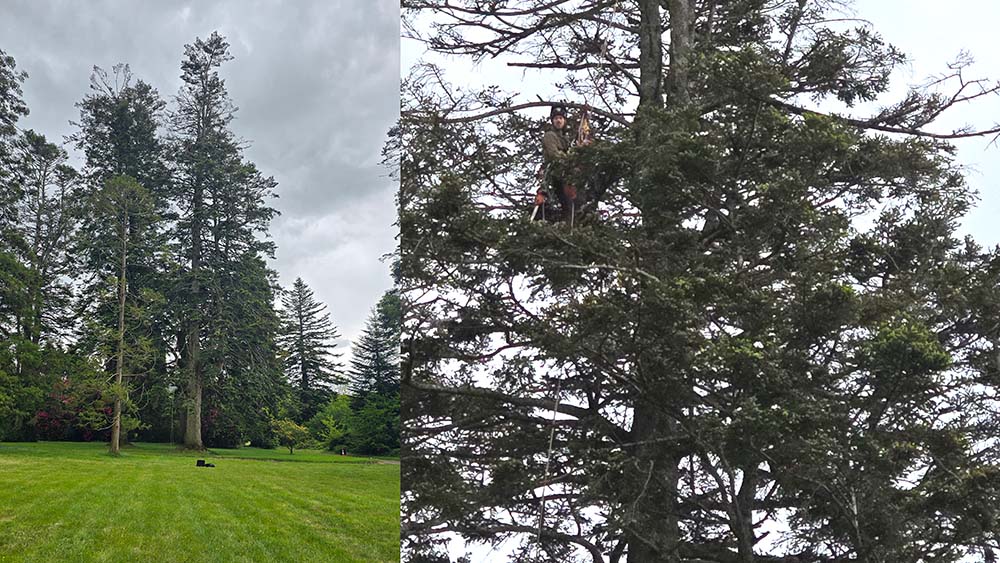
While one climber was working the oak, another Rebel Tree Care team member was nearby in a mature Japanese cedar, Cryptomeria japonica, removing deadwood that was hanging precariously in the canopy.
Before accessing the tree, a caterpillar actually dropped onto the climber’s arm and gave them a bit of a sting. Thankfully, there was no serious reaction and they were able to continue the job safely.
After that, we moved on to a very large fir, approximately 120 feet tall, with deadwood throughout the upper, middle, and lower canopy.
For this tree, we used a slightly different access method. Instead of using a standard throwline and throwball, we used a fishing rod, braided fishing line, and a streamlined fishing weight. This can be a very effective method for setting lines in very tall conifers because the line is lighter, the weight is dense and aerodynamic, and the distance achievable can be much greater than with a standard throwline.
Once the fishing line was placed high in the canopy, we used it to pull in a stronger throwline, and then used that to install our climbing ropes. From there, we set up a base anchor with two ropes.
The most practical access method for this tree was again a drill-powered ascender with a backup system on the second rope. I ascended to roughly 90% of the tree’s height, redirected my ropes, and then worked my way down through the canopy. Descending and working from the ISC Reflex was more comfortable than working directly from the ascender, and the two-rope setup allowed for good positioning and redundancy.
We removed a large amount of hanging deadwood and general dead material, and the tree looked much better and safer afterwards. This type of specialist tree surgery is exactly where experienced climbing arborists are needed, particularly when large trees cannot be accessed safely by machinery.
A Windblown Scots Pine Crown Lodged in Beech
One of the most interesting and precarious jobs on the site involved a mature beech tree, Fagus sylvatica, located on the rear access route between the Wellfield and the Lost City area.
A storm-damaged Scots pine, Pinus sylvestris, had lost a large section of its crown, and the entire top had blown out and lodged high in the crown of the beech. These were not small branches. We were dealing with long, heavy sections of pine, some around 40 feet in length and up to two feet in diameter, sitting awkwardly at height in another tree.
At first glance, climbing directly into the situation did not seem like the safest option. The priority was to make the tree safer before committing a climber to the canopy.
We used a throwline to place a rope over one of the lodged limbs, then pulled in a light rigging rope, followed by a heavier rigging rope. We redirected the line through a pulley and used the tracked wood chipper to apply controlled pulling force from the ground.
After several adjustments and changes of angle, we managed to bring the first large section down significantly. It was still jammed at an angle in the beech, but it had moved from the very top of the crown to a much lower and safer position.
We repeated a similar process with another large section of pine. By pulling from different angles and cutting accessible sections from the ground where possible, we removed much of the hazard without exposing climbers to unnecessary risk.
Only once the worst of the loading and tension had been dealt with did we climb above the remaining sections and cut them out using standard climbing techniques.
This was a great result for Rebel Tree Care. It showed the value of patience, planning, rigging, and not rushing into a climb just because a tree needs to be climbed eventually. Whether it is storm-damaged trees, emergency tree removal, dangerous tree cutting, or complex dismantling, planning the work correctly is what keeps people and property safe.
Directional Felling Near the Lost City
In the Lost City area, we also dealt with a group of mature dead fir trees.
The goal here was to remove them as efficiently as possible while avoiding damage to neighbouring trees. We opted for directional felling. A climber accessed the tree first, removing lower branches that could snag during the fell and installing a pulling line high in the stem.
We then set up a redirect using a pulley to the wood chipper, applied tension through the rigging line, and combined that with accurate felling cuts and wedges.
The tree came down exactly where intended. It was a clean fell, with no damage to the surrounding trees. Once on the ground, we processed the timber and left a usable 20-foot length for the festival team to potentially use as building material. The remaining canopy material was mulched into rough chip.
This was a good example of controlled tree removal, where the safest and most efficient option was to fell the tree directionally while protecting the surrounding trees and site features.
Beech, Scots Pine, Ash, Sycamore, and More
There were several other jobs completed across the site during our visit.
One beech tree over a campsite access route had a dead main stem. I accessed the living section of the tree and removed the dead stem from there. The weather had picked up by that stage, with strong winds moving through the canopy, but conditions remained within a safe working limit and the job was completed successfully.
At the same time, another climber accessed and deadwooded a Scots pine in the Wellfield.
Elsewhere, near the access route to Stage 3, another climber worked on a mature diseased ash with a large codominant stem. The union had a significant included-bark fault line, and if that stem had failed naturally, it could have caused serious damage in a public area. The work was completed successfully and the risk was reduced.
Across the wider site, Rebel Tree Care carried out further ash removals, oak dead wooding, crown raising on sycamores, removal of small dead trees, and work on several medium and mature trees throughout the festival grounds.
A Successful Visit to a Special Site
Overall, it was a very successful visit.
The weather was manageable, the team worked well, and we completed a large volume of safety-focused tree surgery across a complex and busy site. Curraghmore is a special place to work, not only because of the trees and the history, but because of the way the estate, the festival, and the people working there all interact with the landscape.
For us at Rebel Tree Care, this type of work is very rewarding. It combines technical climbing, rigging, tree health knowledge, risk management, tree cutting, tree reduction, tree removal, and practical problem-solving. It also gives us the chance to work in beautiful surroundings and to help keep an important public event safe.
If you are looking for professional tree surgery, tree cutting in Cork, tree removal in Cork, tree reduction, deadwood removal, hedge cutting, site clearance, storm-damaged tree work, or general tree care, Rebel Tree Care provides experienced, safety-focused arborist services for domestic, commercial, estate, and event-site clients.
We will continue sharing more behind-the-scenes looks at the tree work we carry out, the sites we visit, and the techniques we use to manage trees safely and responsibly.